
Develop
Prototype Plan & Build
Prototype Planning

A prototype is a working model of the solution (e.g. an app, webpage or a physical product). The goal of a prototype is to simulate the interaction between the user and the interface.
Prototyping is a way to validate the hypothesis that a product/solution will solve the problem it is intended to solve. Although not fully functional by any means, a prototype often looks and works real enough that potential users can interact with it and provide feedback. If the feedback reveals that the prototype is pretty far off the mark, then the company saves weeks or months from building something that won’t work in the real world. At the same time, a positive reaction to a prototype indicates the product concepts are on the right track, and development should proceed.
Before building the prototypes, it is important to decide what is to be evaluated/tested for the prototype, how to test the prototype, and what will be the success metric.
A Design Hypothesis, is basically an assumption. A Hypothesis helps to prove or disprove the assumption. Every hypothesis that is tested has the potential to generate new insight for future rounds of the product's development.
Testing Environment is a set-up in which the Prototype is put for accepting or rejecting Hypothesis. It is important to select the right testing environment and testing duration, which can be representative of the actual user environment and provide sufficient insight.
Success Metrics is the evidence that we need from the test and testing environment, to conclude if the prototype is successful in its desired outcome or not. It must be well quantified and not abstract.
Critical Function/Experience Prototypes (CFP/CEP)

Design, build, and test a critical component, subsystem or function that is fundamental and necessary to the success of the design.
A solution is usually built in parts. These parts are designed, built and tested individually, and later assembled together into the solution. Critical Function or Experience prototypes ensure that we are sure on the features that are most critical to establish the unique value proposition of the solution.
Alpha (Lo-Fi) and Beta (Hi-Fi) Prototypes
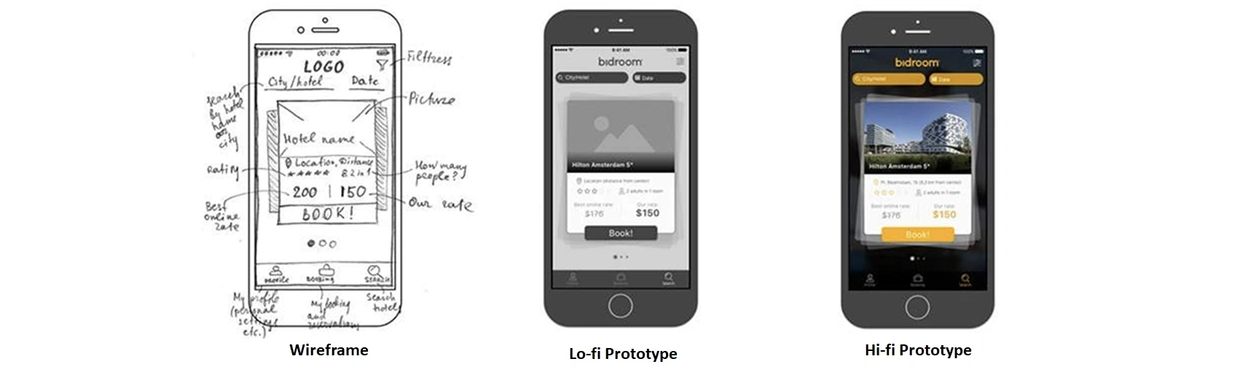
The fidelity of the prototype refers to the level of details and functionality built into a prototype.
A low-fidelity prototype is the first fully functional prototype of the product, with all the elements/systems integrated to examine feasibility and usability of the product. The visuals, aesthetics and finishing of the product is discounted (unless those are the critical requirements of the product). The Lo-fi prototypes cover primarily the user interface (UI) and user Experience (UX) of the product in terms of functionality.
A high-fidelity prototype is an interactive representation of the product in its closest resemblance to the final design in terms of details and functionality. The “high” in high-fidelity refers to the level of comprehensiveness that allows you to examine usability questions in detail and make conclusions about the user behavior. The hi-fi prototypes cover not only the user interface (UI) of the product in terms of visuals and aesthetics, but also the user experience (UX) aspects in terms of interactions, user flow and behavior.