
Ideate
Proposals & Evaluation
Solutions Tree
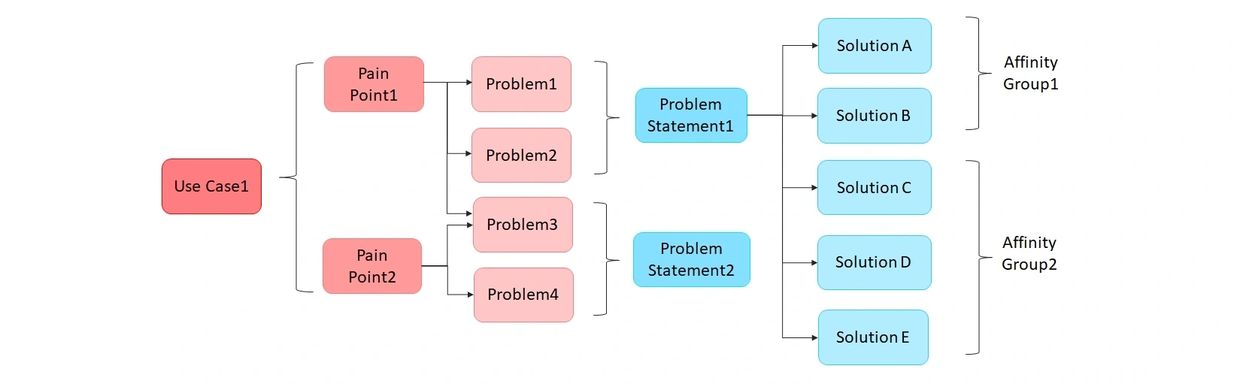
Solution Tree mapping
One of the key aspect of Problem solving or Product Management through Design Thinking approach is that multiple solutions are proposed and evaluated for each Problem statement. The Solution tree is mapped for all the solutions shortlisted for further evaluation after Dot Voting of ideas from the Brainstorming sessions.
Impact/Effort Evaluation
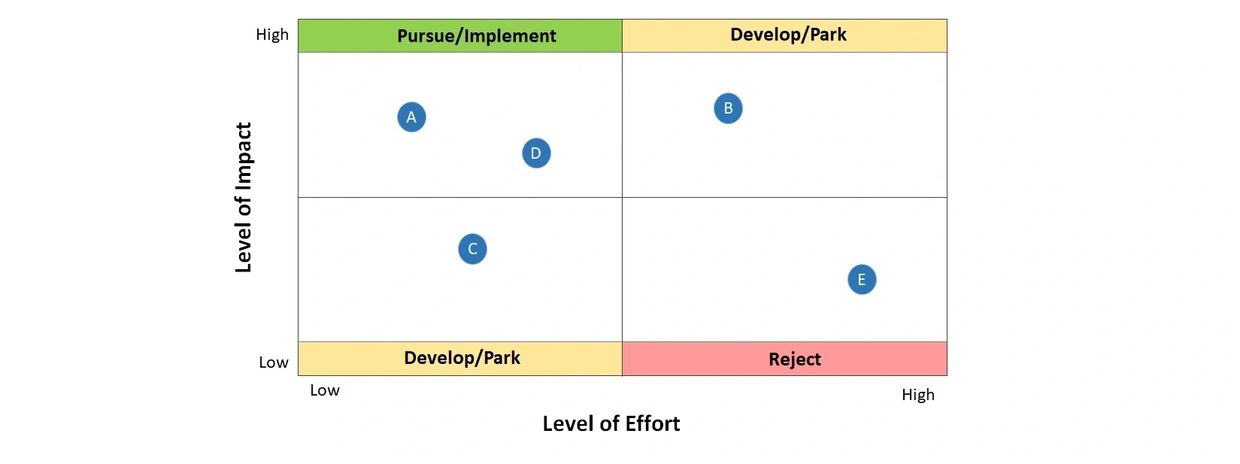
Impact Effort (or Value Effort) matrix is a lean prioritization tool that helps prioritize solutions based on their Impact to the user (benefit) and Effort required to develop the solution.
Each of the shortlisted solutions are evaluated for their impact on the user and effort required for development. Thereafter, they are mapped over Impact/Effort matrix under 4 quadrants:
1. High Impact, Low Effort: These solutions are most prioritized for development and Implementation.
2. High Impact, High Effort: These solutions are parked and re-evaluated for effort. They are pursued based on strategic direction for the high-effort commitment.
3. Low Impact, Low Effort: These are low hanging fruits. Usually, these are prioritized only after the other developments are done. However, in some situations, these solutions solve some nagging issues and are taken into development.
4. Low Impact, High Effort: These solutions are rejected.
DFV Mapping
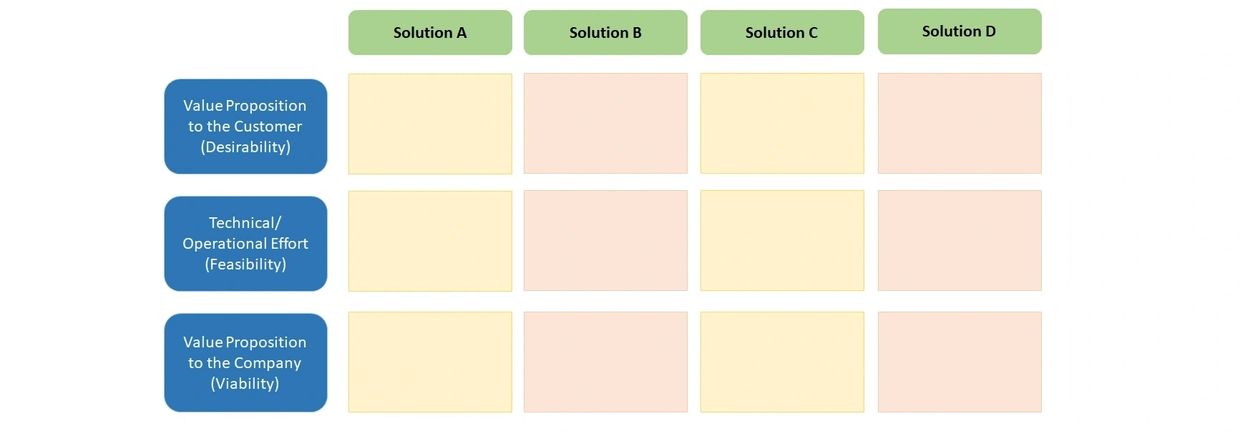
Desirability, Feasibility and Viability Evaluation
DFV is more detailed evaluation of the solutions based on Desirability, Feasibility, and Viability criteria of 'the most valuable design'. Instead of High or Low Mapping, each solutions are detailed with the Desirability (Value Proposition to the Customer), Feasibility (Technical/Operational Effort), and Viability (Value Proposition to the Company). Based on these inputs, some solution are prioritized or rejected for the next steps.