
Empathize
Pain Points to Problem
5 Whys
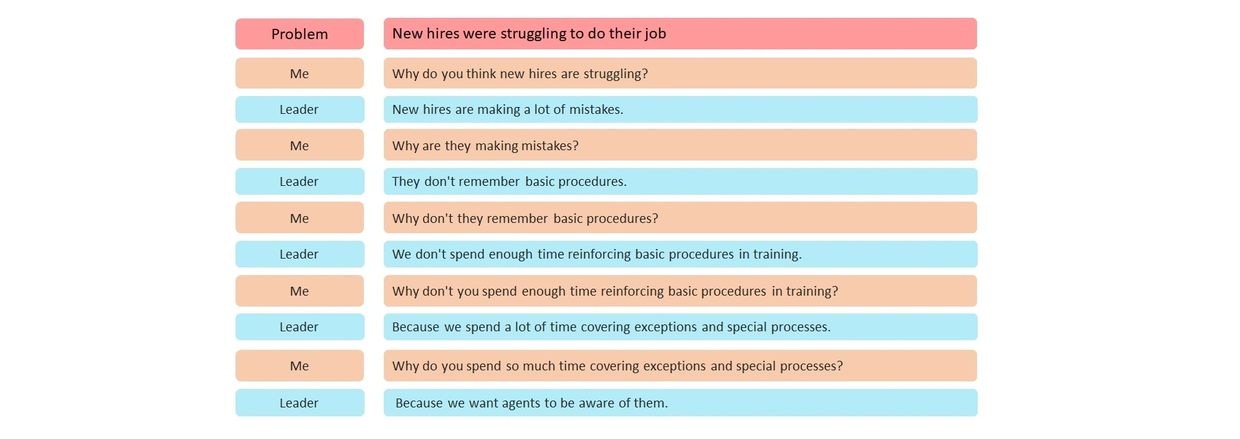
The 5 WHYs method is an iterative interrogative technique, pioneered at Toyota Motor Corporation in the 1930s, to explore the root cause underlying a specific pain point/problem, by asking 'Why' five times.
In most cases, the observed pain point is only the symptom of a real problem that lies underneath. The 5 WHYs methodology is very simple, yet effective tool to get to the root cause of a problem. In this methodology, we ask "Why (so)?" multiple times to the user or whoever we are interviewing. Five times is a general thumb rule, but sometimes, we get to the root cause in lesser or more iteration. The idea is to keep asking "Why (so)?" question, till there is no further answer to it. The final answer is considered as the root cause of the observed pain-paint - the Problem that needs to be solved to address all other issues observed earlier.
5 WHYs methodology is used during Empathy interviews with the users, as well as interviews with stakeholders. The data is gathered for the root cause problem for further analysis in next phase.
Cause and Effect Mapping (Fishbone or Ishikawa Diagram)

Cause-and-effect diagram, also known as Fish-bone or Ishikawa diagram, organizes possible causes for a problem by graphically displaying them with increasing detail.
The cause-and-effect diagram is based on the assumption that an effect (mapped as head of the fish) is often caused by multiple factors (mapped as spines of the fish). Each of these causes is then mapped as effect of some other causes, iteratively, till no further branching is possible.
Here, User's pain point (effect) is analyzed for possible causes, which are again fragmented into sub-causes. The objective of this diagram is to map all the possible root causes (which we call as the Problems) of the observed pain points of the user. The data is gathered for the root causes for further analysis in next phase. The cause-and-effect diagram can be used as an alternate to or in conjunction with 5 WHYs (each cause is detailed by asking 'Why' questions, five times).
Mind Mapping
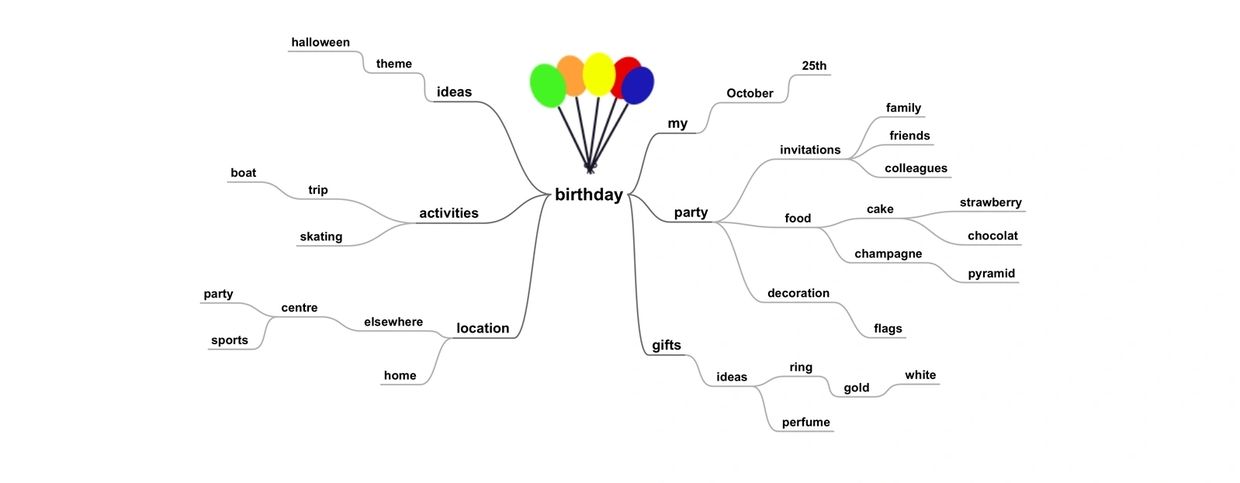
Mind mapping is another methodology to break-down problems into sub-problems, iteratively, till no further branch-out is possible.
For Mind mapping, we usually start in the middle of the page with the central theme (observed pain point) and from there we work outward in all directions to create a growing diagram composed of keywords, phrases, concepts, facts and figures. It differs from the cause and effect diagram in a way that Mind Mapping also considers the associated factors (with possible correlation and no causal relationship) and uses more of creative (abductive) reasoning to possibly explain the problems, as it evolves into branches. The stronger the association, the nearer their branches are.
The objective of this diagram is to map all the possible root causes (Problems), so as to gather further data and information on it for analysis in next phase.