
Empathize
Process and Stakeholders
Process Map
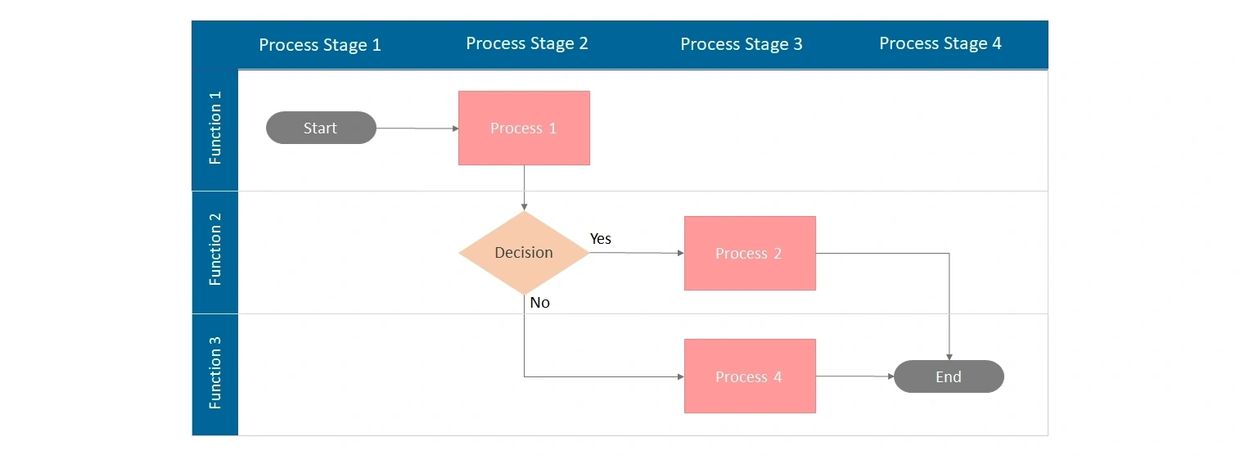
The experience at each touchpoint of the User journey is the outcome of a back-end process. Process Map is the comprehensive mapping of all the processes and activities that result into users' experiences across their journey.
The above template is the simplest form of Process map. The complexity of Process Map increase with more process stages, activities, and stakeholders involved. The map has Process Stage on the X-axis and Stakeholder function on the Y-axis. The milestones, activities, and decisions are depicted in different shapes. The system/tools used for the activities are mentioned above the connecting-arrow mark. The Process Map helps develop understanding of every activities that influences the user's experience at each touch points and are the cause of user's pain point.
Stakeholder Map
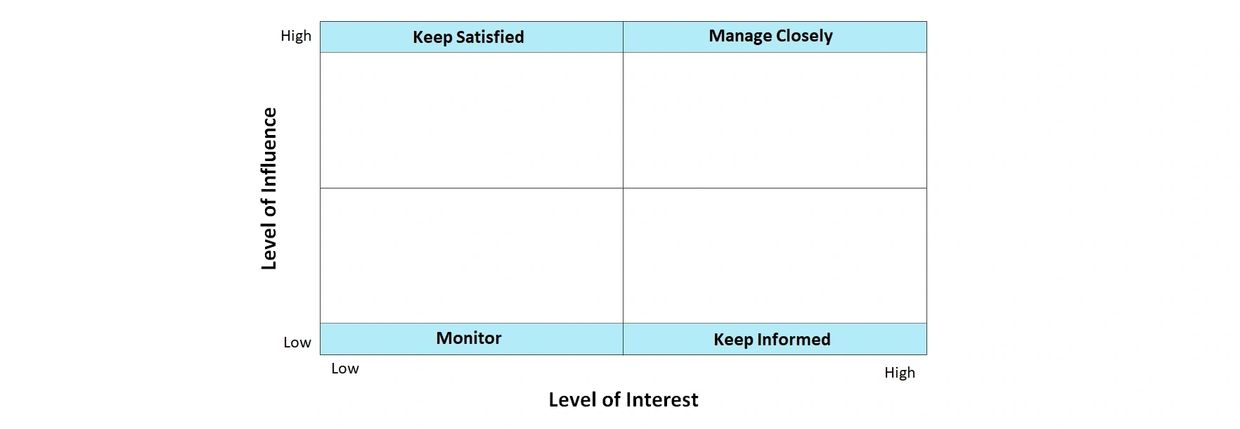
Identifying and mapping stakeholders are the most important part of "Design Thinking" as it relies on their collaboration to define the root cause of the pain points (problems) in Problem space, and ideate possible solutions in the Solution space.
The process map details all the stakeholders involved in making the solution available to the user and further interactions. The stakeholders are mapped against the level of Influence and interest to the process.
1. High Influence, High Interest: These stakeholders become the core member of 'Design Thinking' process and are needed to be involved closely in the entire process of problem-solving and product management.
2. High Influence, Low Interest: These stakeholders are usually senior leaders in the respective functions or generic influencers, who, though, may not be directly involved in the process, but has high influence on decision making. They must be kept satisfied through out the Design Thinking process and be consulted at times for guidance and approvals.
3. Low Influence, High Interest: These stakeholders should be kept informed throughout the process. Because of the high level of interest, they sometimes come up with desired expertise to understand the problem (in problem space) and create the solution (in solution space).
4. Low Influence, Low Interest: These stakeholders should be monitored for their changing level of interest and influence in the future.